
Introducing the Limbic System Protocol ®

The LSP is a gentle, hands-on solution for easing psychological stress by calming overactive and inflamed parts of your brain.
LSP mark

Training Courses

A four-day immersive experience that introduces the neurophysiological rationale for the LSP, includes extensive subcortical techniques and significant portions of the limbic gyrus. Over 80 individual techniques taught and demonstrated

Licensed healthcare practitioners with experience in the treatment of head injuries and central nervous system conditions.

Create an account and apply for a position in the course. Your application is based upon previous continuing education experience in manual therapy.

If your application for attending an LSP seminar is approved then your account will go active and you will gain access to a growing library of preparatory videos and a digital study guide to review before the course.
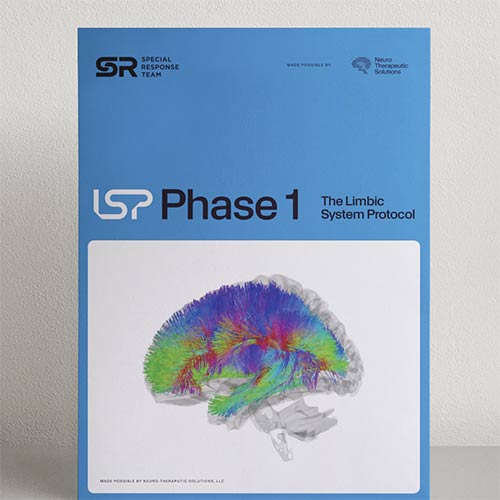
Next in-person course:

LSP Phase I - (Melbourne, AUS)

November 4–7, 2026

Melbourne Australia - Victoria University
Attend this course

LSP for Practitioners

The LSP represents a culmination of 6 years of clinical work with clients experiencing persistent autonomic nervous system dysfunction. Though multiple therapeutic approaches had proven temporarily successful, none seemed able to achieve lasting results with this psychologically affected cohort. Starting at the top of the central ANS we aimed to identify specific  structures that had a direct effect on the global pattern of peripheral nervous system activation. Manipulating these regions dramatically impacted the near complete presentation of peripheral nervous system sensitization, opening the door to a new field of highly specific central neural treatments. The LSP is highly effective as a stand alone intervention and pairs seamlessly with a wide variety of other manual therapy modalities.
Establishing Safety & Efficacy →

LSP For Patients & Clients

The LSP has a profound impact on one's ability to relax and achieve a level of calm, resulting in a mind that feels truly at rest. It is generally anti-inflammatory for the body and helps with the mitigation of chronic exposure to stress and stressful environments. It is used for a wide range of applications depending on the individual and their needs.

The LSP can have a tremendous impact on ones central autonomic nervous system thereby helping to reset aspects of your sleep and wake cycles, thereby resetting your system back to baseline function.

Though there is no accepted or known cure for the condition known as PTSD, clients of LSP practitioners have consistently reported that they feel significant relief from the symptoms associated with the condition. So much so that they often proactively seek LSP treatment when they experience a flare in their condition.

An interesting aspect of certain phases of the LSP is the dramatic impact that it can have on ones physical performance. Many of the law enforcement officers report improved reaction times, increased, sustained high output activity and visual acquity improvements. Many of our clients that are athletes now request an LSP session to help them before matches as the LSP is reported to give them a competitive edge.

Locate an LSP Practitioner →

Areas of impact

Currently the LSP exists within four distinct classes. Trauma, First Responders (LEO's, Paramedics, Firefighters), Wellness (general health and anti-inflammatory efforts) and Peak Performance (Athletes, Executives & high stress occupations)
LSP

Trauma

LSP

First Responders

LSP

Peak Performance

LSP

Health & Wellness

As a practitioner, I thought I understood healing—until my own life fractured. Experiencing the power of the Limbic System Protocol (LSP) while walking through the fires of severe personal trauma didn't just help me survive the peak of my crisis; it fundamentally reconnected me to myself. The transformation was nothing short of breathtaking....
Kim Braun, PT, DPT, CACI, JSCC, CSCI
As a practitioner, I thought I understood healing—until my own life fractured. Experiencing the power of the Limbic System Protocol (LSP) while walking through the fires of severe personal trauma didn't just help me survive the peak of my crisis; it fundamentally reconnected me to myself. The transformation was nothing short of breathtaking. Almost immediately, the world literalized this internal shift: my physical vision grew sharper, brighter, and vividly clear, even at a distance. When my annual eye exam confirmed that my vision had actually improved, I knew something profound had shifted deep within me. Even more beautiful was the quiet revolution happening in my heart. The heavy, protective armor of compartmentalization and avoidance—mechanisms I had relied on for survival—simply dissolved, making room for healthier, gentler ways of coping. Suddenly, I felt a long-awaited reunion with a younger, untamed, and untraumatized version of myself. I began to dream again, and for the first time in years, those dreams returned in vibrant color. The constant, exhausting alarms of past and present triggers finally fell silent, giving me the sacred space to choose my responses rather than just survive them. In place of chaos, an overwhelming sense of peace, control, and well-being took root. I am profoundly grateful for this gentle, manual therapy. It did what once felt impossible: it quieted the inflammation in the very centers of my brain where my physical, emotional, and psychological traumas were held captive. It reshaped how I carry my memories and how I define my past. The LSP is no longer just a tool in my practice; it is a lifelong sanctuary for my own heart as I navigate the messy, beautiful human journey called life.
Treating the physical and physiological footprints of trauma via the LSP techniques has revolutionized my clinical approach. It has enabled me to effectively help individuals break through chronic stress, central sensitization, chronic pain and improve their autonomic regulation.
John Zdor, DPT, PT, OCS
Treating the physical and physiological footprints of trauma via the LSP techniques has revolutionized my clinical approach. It has enabled me to effectively help individuals break through chronic stress, central sensitization, chronic pain and improve their autonomic regulation.
I have been a physical therapist for over 30 years and own a private practice where I currently focus primarily on Counterstrain and other indirect manual therapy approaches. Over the course of my career, I have found that as my skills have improved, the complexity of the patients seeking my help has increased as well. Many of the individuals I...
David Disselbrett, MSPT, JSCC, CSCI
I have been a physical therapist for over 30 years and own a private practice where I currently focus primarily on Counterstrain and other indirect manual therapy approaches. Over the course of my career, I have found that as my skills have improved, the complexity of the patients seeking my help has increased as well. Many of the individuals I treat present with chronic pain, central sensitization, trauma histories, and other multifaceted conditions that do not respond adequately to traditional treatment models. Approximately one year ago, I was introduced to the Limbic System Protocol. Since that time, it has fundamentally changed my understanding of what is possible in patient care. The LSP has provided a framework for addressing aspects of nervous system dysfunction that I had previously struggled to influence, and it has expanded my ability to help patients with highly complex presentations. The impact on both my professional practice and my personal outlook has been profound. It has been a tremendous addition to my clinical toolbox and has renewed my enthusiasm for practice at a stage in my career when many clinicians might be winding down. Instead, I find myself as excited about learning and helping patients as I was when I first entered the profession. What has impressed me most is the potential to help individuals suffering from trauma-related conditions, including PTSD, whether their primary concerns are chronic pain, emotional distress, or a combination of both. The opportunity to assist patients in these circumstances is a privilege, and the LSP has opened new avenues for meaningful clinical change. I also appreciate how well the protocol integrates with other indirect treatment modalities. It functions effectively as a standalone intervention while also complementing approaches such as Counterstrain and other light touch therapies. In my experience, it bridges these disciplines in a way that is both practical and clinically valuable. Beyond the professional benefits, I have personally experienced treatment using the Limbic System Protocol and found it helpful in resolving some of my own longstanding patterns of dysfunction. This firsthand experience has further strengthened my confidence in the approach and its potential. I enthusiastically encourage clinicians who have an interest in nervous system regulation, trauma-informed care, chronic pain, or indirect manual therapies to explore the Limbic System Protocol. It has broadened my perspective, expanded my clinical capabilities, and renewed my optimism about what is possible for patients who have often exhausted other treatment options. I am a strong supporter of this work and look forward to seeing its continued growth and development.